You know what's crazy about ancient Egypt? For literally over a millennia, they were completely mute.
We had all these massive pyramids, towering statues, and creepy tombs completely covered in hieroglyphs, but nobody had a single clue what any of it meant. After the Roman empire collapsed, the knowledge of how to read those symbols just vanished. During the Middle Ages and the Renaissance, people honestly thought the symbols were magic spells or mystical picture-puzzles. Scholars would spend their whole lives just making up wild, totally wrong translations based on vibes.
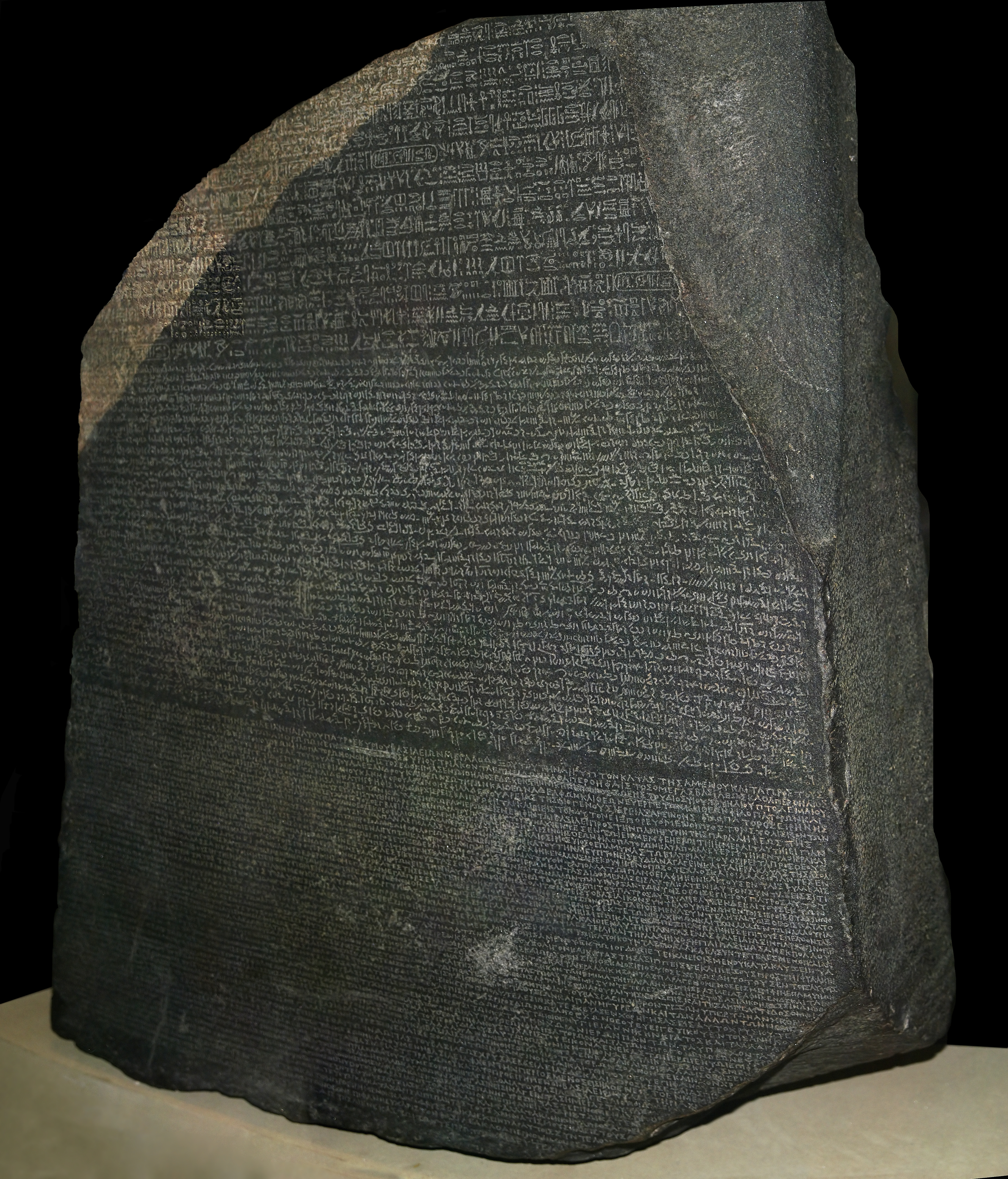
That all changed in 1799 because of a busted up, 1,600-pound dark grey rock.
The Rosetta Stone is probably the most famous artifact on the planet. Not because it looks cool—honestly it's just a jagged, broken piece of granodiorite—but because it was the ultimate cheat code to unlocking a dead civilization. Heres the actual story behind it, how it got stolen, the massive nerd-fight to decipher it, and why people are still fighting over it today.
Not a Magic Spell, Just a Boring Tax Document
Because it's so famous, alot of people assume the Rosetta Stone has some profound ancient wisdom on it. Secrets of the afterlife, or maybe a curse. Nope. It's basically a piece of bureaucratic state propaganda and a tax break.
It was made in 196 BC when King Ptolemy V was in charge. Fun fact: the Ptolemaic dynasty wasn't even Egyptian. They were Greek Macedonians, descended from one of Alexander the Greats generals who took over Egypt. They spoke Greek, acted Greek, and the native Egyptians kind of hated them.
When this stone was carved, Ptolemy V was only 13 years old and he was stressing out. His empire was losing wars, and native Egyptians were actively rebelling against him because they were taxed to death. The kid desperately needed the local Egyptian priests on his side, because the priests had all the money and influence over the common people.
So, they struck a deal in the city of Memphis. Ptolemy agreed to cut their taxes, forgive debts, and give the temples a bunch of silver. In exchange, the priests agreed to hype him up. They promised to put statues of him in their temples and throw big parties for his birthday.
To make sure literally everyone got the memo, they carved this legal agreement in three different scripts:
- Hieroglyphics: The sacred "language of the gods" used by the priests.
- Demotic: The everyday, cursive script that normal, literate Egyptians used for daily stuff.
- Ancient Greek: The language of the government and the Greek ruling class.
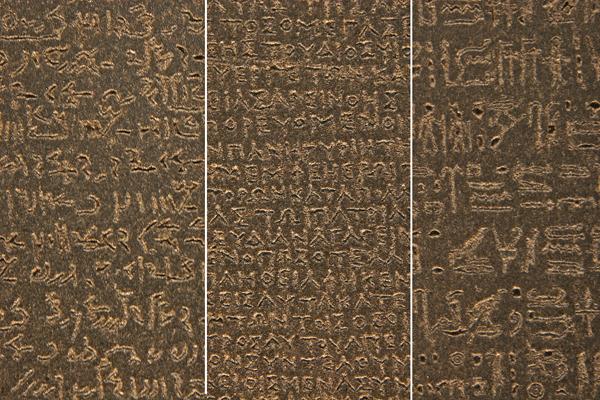
It was just a pragmatic PR stunt. But putting those three languages side-by-side is what ended up saving ancient Egypt from being forgotten forever.
Finding it in the Dirt
Fast forward to the summer of 1799. Napoleon decides he wants to invade Egypt. He brings his army, but he also brings a bunch of scientists and scholars because he wanted to map out the country and steal cool antiquities.
In July, some French soldiers led by a guy named Lieutenant Pierre-François Bouchard were digging around an old medieval fort called Fort Julien, near a town they called Rosetta. They were just trying to reinforce a wall when they hit this massive black rock. Bouchard looked at it and instantly realized it was a huge deal. He saw the Greek writing at the bottom, the weird cursive in the middle, and the hieroglyphs at the top.
They sent it to Cairo for the French scientists to study. But the French didn't get to keep it for long.
The British military showed up, teamed up with the Ottomans, and absolutely wrecked the French army in 1801. When the French surrendered, there was a massive standoff over who got to keep the artifacts. The French general tried to hide the Rosetta Stone in his personal luggage, claiming it was his private property. The British general basically said "yeah right" and refused to let them leave until they handed it over. A British diplomat literally went into the French camp and confiscated it.
They shipped it to England in 1802, King George III gave it to the British Museum, and its been sitting there almost continuously ever since (they only moved it once during WW1 so it wouldn't get bombed).
The Ultimate Nerd Rivalry: Young vs. Champollion
So now the rock is in London. Scholars all over Europe quickly translated the Greek part at the bottom. And since the very last sentence of the Greek text says "this is the same decree written three times," everyone knew exactly what the hieroglyphs should say.
You'd think they would figure it out in a week, right? Wrong. It took over 20 years and turned into a bitter, nationalistic rivalry between England and France. Matching known Greek words to random pictures of birds and snakes is maddening.
The first major breakthrough was by an English polymath named Thomas Young. He was a literal genius who also did groundbreaking physics work. In 1814, he started treating the stone like a math puzzle. He noticed these little oval circles carved around certain groups of hieroglyphs—these are called "cartouches".
Young guessed that the ovals were like ancient highlighters used to make royal names stand out. He looked at his Greek cheat sheet, saw the name "Ptolemy" repeated a bunch of times, and found the matching ovals. He sounded out the symbols inside: P-T-O-L-M-E-S. He proved that the pictures weren't just symbolic ideas; they were phonetic sounds.
But Young eventually hit a wall. He thought only foreign names like Greek ones were spelled with sounds, and the rest of the language was still just pictures.
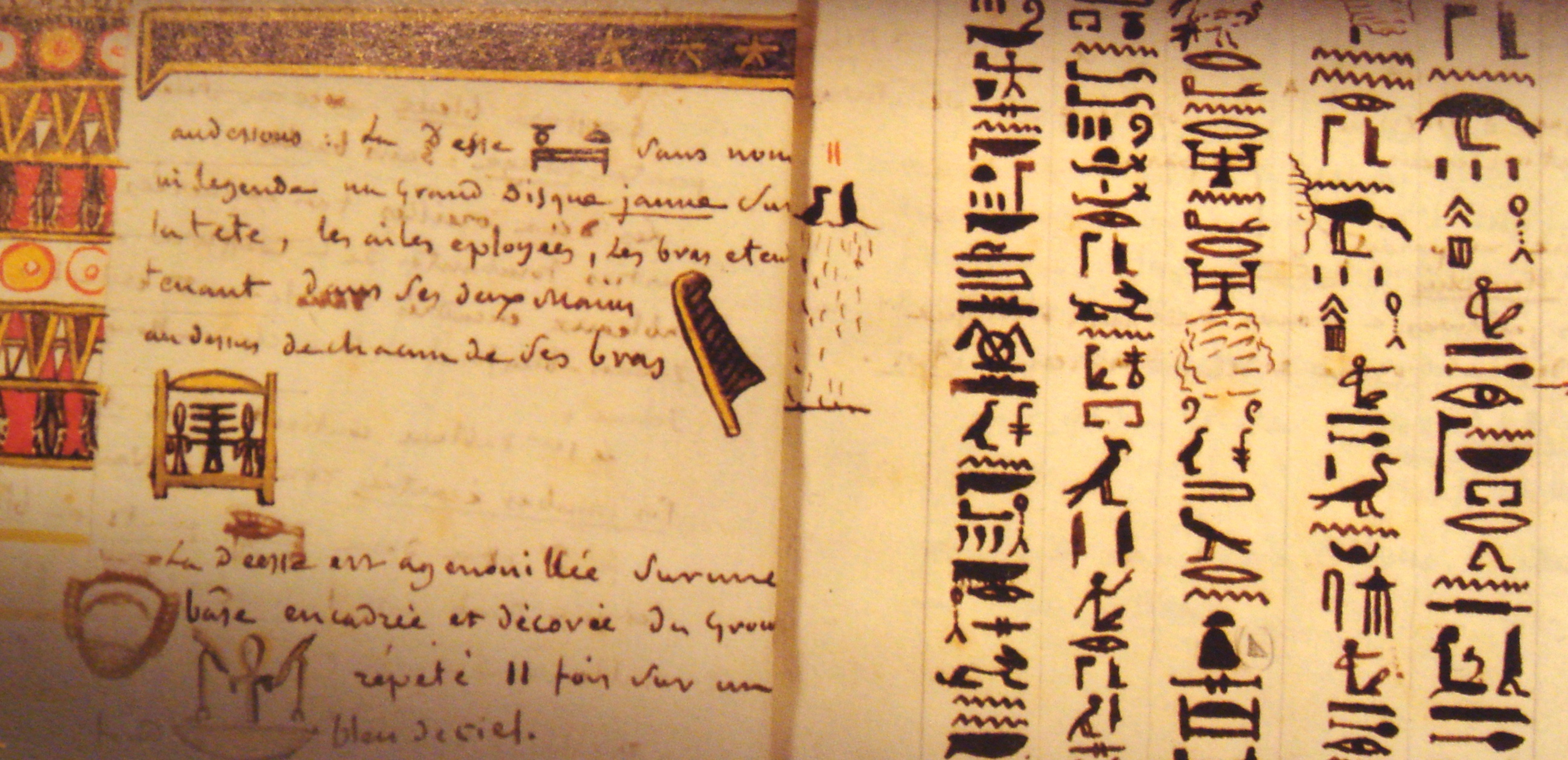
Enter Jean-François Champollion. This French guy was an absolute language freak. He knew Latin, Greek, Hebrew, Arabic, Sanskrit, and a bunch of others by the time he was a teenager. Crucially, he was fluent in Coptic, which is the language of the Egyptian Christian church and the direct descendant of ancient Egyptian.
Champollion took Youngs cartouche idea and went crazy with it. He started translating other names like Cleopatra. But his massive "Eureka" moment happened in 1822. He was looking at copies of carvings from much older temples, way before the Greeks ever showed up. He found an oval with a sun symbol (which he knew from Coptic was pronounced "Ra"), a symbol for "m", and a symbol for "s".
Ra-m-s-s. Ramses.
He found another one. Thoth-m-s. Thutmose.
He realized the entire ancient Egyptian language was phonetic. It was a crazy mix of alphabet sounds, whole-word symbols, and silent symbols that just add context. Champollion was so hyped that he grabbed his papers, ran down the street to his brothers office in Paris, screamed "Je tiens l'affaire!" (I've got it!), and literally passed out on the floor. He was bedridden for days from the adrenaline crash. Drama queen? Yes. But he earned it.
Who Actually Owns It?
Today, the Rosetta Stone is the most visited thing in the British Museum. But it's surrounded by a massive amount of modern drama about who actually owns it.
For years, Egypt—especially famous archaeologists like Zahi Hawass—has been demanding the British Museum give it back. And honestly, their argument makes a lot of sense. The stone was dug up by an invading French army and then taken as the spoils of war by an invading British army. The actual Egyptian people had literally zero say in the 1801 treaty where Britain "legally" acquired it. To Egypt, its the ultimate icon of their identity and they want it in their new Grand Egyptian Museum in Giza. A few years ago over 100,000 Egyptian scholars signed a petition demanding it back, calling it a symbol of western colonialism.
On the flip side, the British Museum refuses to let it go. Their main defense is that it was acquired legally according to the international laws of the 1800s. They also push the idea of the "universal museum"—basically saying that by keeping it in London, millions of people from all over the world can see it for free and study how different cultures connect. They are definitely terrified that if they give the Rosetta Stone back, it sets a precedent and they'll have to empty out their entire museum.
It's a really messy debate. Who owns history? The people who made it, the land where it was found, or the people who took it and figured out how to read it?
Why it Matters
Regardless of whether it stays in rainy London or goes back to the Egyptian sun, the stone itself is a miracle. Without that random, broken slab of rock, we would never be able to read the Book of the Dead. We wouldn't know the daily rituals of the temples, the epic poetry they wrote, or the actual histories of the pharaohs.
It turned a silent, mysterious culture back into real, breathing people. And it’s pretty crazy to think that it all happened because a 13-year-old king was stressed out and needed to give his priests a tax break.


